Accomplishments

Four landmark financings that show how structured real estate capital can recapitalize federal campuses, restore civic buildings, expand universities, and revive transit stations.

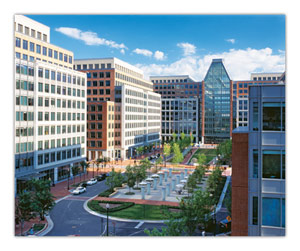
United States Patent and Trademark Office headquarters campus
USPTO consolidated headquarters — the largest leased federal facility in the United States.

Alexandria, Virginia

Recapitalizing the U.S. Patent and Trademark Office headquarters

BWRA successfully structured the $872,000,000 recapitalization of the new privately owned facility leased by the General Services Administration (GSA) to serve as the consolidated headquarters for the United States Patent and Trademark Office (USPTO).

The USPTO project represents the largest leased federal facility in the United States. The facility contains nearly 2.5 million square feet in five office buildings and two townhouses, with two adjacent garages with space for over 3,500 cars.

Through its use of tiered debt and new equity, BWRA was able to obtain for the complex owner a yield of more than twice the return it originally sought from the recapitalization.
Washington, D.C.

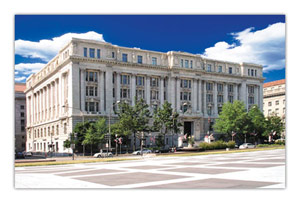
Restoring City Hall in Washington, D.C.

BWRA’s principals successfully leveraged the federal Historic Preservation Tax Credit and secured private investors to renovate the District of Columbia’s City Hall. This enabled the financially strapped District government to restore the six-story white marble building to its former grandeur.

Within a few years, Washington, D.C.’s government became financially solvent again and negotiated to buy back the building from its investors. Today the $71 million project, completed in 1999, stands as the centerpiece of Washington’s renewal.

How historic tax credits support civic restoration →

John A. Wilson Building, the District of Columbia City Hall
District of Columbia City Hall — restored with historic preservation tax credits and private capital.
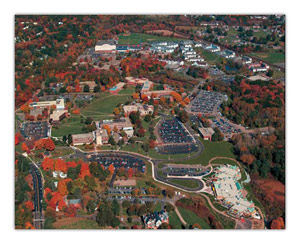
Aerial photograph of the University of Hartford campus in autumn
University of Hartford — residence halls financed on land leased from the university.

Hartford, Connecticut

Converting the University of Hartford from a commuter school to a residential university

In the 1980s, the University of Hartford embarked on an ambitious expansion plan to attract students from beyond Connecticut’s borders, transforming from a commuter school to a residential university with a geographically diverse student population. As a result, the school needed to expand and build dormitories, but lacked the endowment and debt capacity to support such growth.

The university turned to BWRA’s model, which is ideal for non-core college or university assets such as dormitories or faculty office space, to finance new construction. Investors built two- and three-story housing on land leased from the university; the university leased back the buildings and will ultimately own them.

Nonprofit and campus financing →

Newark, New Jersey

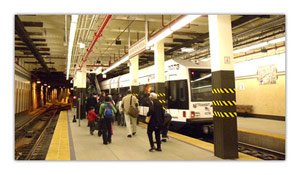
Transforming Newark’s Pennsylvania Station

Taking advantage of the federal Historic Preservation Tax Credit, BWRA’s founder created a financial structure to restore Penn Station in Newark, New Jersey from a state of decay.

Under the structure, Amtrak leased the ground under the station and sold the building to investors, maintaining control at all times through an innovative ground-lease agreement. New Jersey Transit leased the station from the investors and used operating-lease financing to rehabilitate the station, while at the same time preserving control over the station’s operation.

Investors had an attractive and safe investment, as well as an opportunity to contribute to Newark’s urban renewal.

Passengers on a platform at Newark Pennsylvania Station
Newark Penn Station — restored through a ground lease, operating lease, and historic tax credits.

Discuss a comparable structure

If you occupy a credit-worthy campus, civic building, or leased headquarters, BWRA can evaluate whether a similar recapitalization is feasible.

Contact BW Realty Advisors